Quick answer. If cleaning is currently falling on staff who have better things to do, or your facility’s started looking a bit worn despite everyone trying their best, you probably need a proper service. Most businesses hit this point once they’ve grown past a certain size or their space just gets too busy to keep on top of informally.
I get the hesitation though. It feels like an avoidable cost. Get staff to tidy up, get someone in once a week with a mop, job done. And for a genuinely tiny office, fair enough, that might actually work. But for most facilities, that approach falls apart way sooner than people expect.
Let’s actually work through whether it makes sense for yours.
The short version
If cleaning’s eating into staff time or just getting inconsistent, that’s usually the first real sign.
Size and foot traffic matter more than what industry you’re in when working out how much cleaning you actually need.
This covers a lot more than offices. Warehouses, shops, medical practices, industrial sites, all different, all need something slightly different.
The cost isn’t just the invoice. Factor in what bad cleaning’s already costing you through sick days, worn out furniture, and clients who notice more than you’d think.
Local providers, the kind already doing commercial cleaning Blackburn and commercial cleaning Nelson work, tend to know the building types round here better than some national chain that’s never set foot in the area.
What Counts as Commercial Cleaning Anyway
People throw this term around loosely, so worth actually defining it.
Commercial cleaning is professional cleaning for business premises, not homes. Offices, shops, warehouses, medical facilities, gyms, industrial sites, all of it. It’s generally more involved than cleaning a house too, since business premises often need specific equipment, have to meet health and safety standards, and get scheduled around working hours rather than whenever’s convenient.
What’s actually needed changes a lot depending on the place. An office needs desks done, washrooms sorted, kitchen kept sane. A warehouse needs floors that can handle machinery traffic, dust control, sometimes specific waste handling depending what’s stored there. A medical facility’s a different world entirely, with hygiene rules that aren’t really optional.
How Do You Actually Know If You Need This
Comes down to a handful of practical signs rather than any strict rule.
Is Your Staff Doing the Cleaning Right Now
If your receptionist’s wiping the kitchen down between calls, or there’s some unofficial “person who deals with the bins,” that’s usually a sign things have outgrown whatever casual arrangement you started with. Bad use of anyone’s time, and it never stays consistent, because it’s nobody’s actual job.
Has Your Facility Grown Since You Last Thought About This
Loads of businesses set up something casual early on and just never look at it again as they’ve grown. What worked with fifteen people doesn’t work with fifty. What worked in one small unit doesn’t scale to a bigger site or a second location without someone rethinking it.
Are Things Actually Looking Worn or Are People Complaining
Carpets ageing faster than they should. A client mentioning the washroom wasn’t great. Staff saying something feels dusty or stuffy in certain corners. These are usually the tell that your current setup isn’t keeping up with how the space actually gets used day to day.
Does Your Industry Just Require It
Food premises, healthcare, anywhere with proper compliance rules, these basically need professional cleaning as standard. Casual arrangements won’t cut it, and getting caught short here can mean actual regulatory trouble, not just an awkward conversation.
Where Does Commercial Cleaning Actually Show Up
Pretty much anywhere that isn’t someone’s house, but here’s where it’s most common.
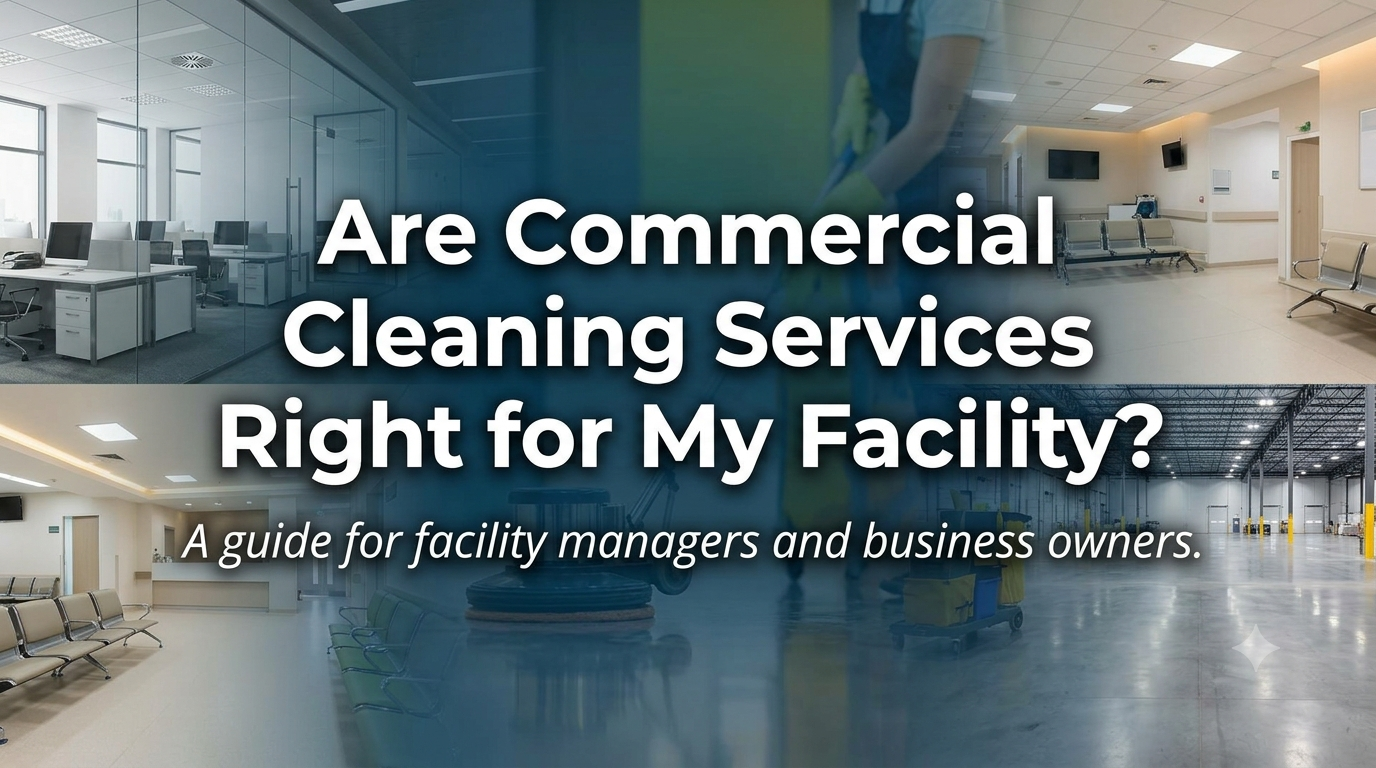
Offices are the obvious one, daily desk and washroom work plus periodic deep cleans for carpets and windows. Shops need floors sorted constantly given how many feet pass through, plus windows cleaned since that directly affects how the place looks from the street. Warehouses and industrial units often need heavier cleaning, dealing with dust, debris, sometimes hazardous material handling depending what’s being made or stored.
Medical and dental practices have some of the tightest requirements going, given infection control. Gyms need constant attention, obviously, given the sweat and shared equipment situation. Schools need something that’s thorough but works around term dates rather than fighting against them.
What’s Actually Included in a Commercial Cleaning Service
Varies by provider and facility, but there’s a common backbone.
Daily or scheduled visits usually cover floors, surfaces, washrooms, and shared spaces like kitchens or break rooms. Waste gets handled too, regular bin removal and sometimes recycling sorting depending on the site. Deep cleaning happens periodically, dealing with carpets, upholstery, windows, and the harder to reach spots daily visits never touch.
A lot of providers offer specialist stuff too, depending on what the facility needs. Floor stripping and resealing for heavy traffic zones. Disinfection treatments for higher risk environments. Cleanup after construction work, which honestly gets everywhere and takes proper equipment to sort properly.
Is It Actually Worth Paying For
This is the real hesitation for most people, and it’s a fair one to have.
The direct cost is obvious, you’re paying for something you could technically do without. What’s less obvious is what bad or patchy cleaning’s already costing you. Sick days tend to creep up in poorly kept spaces, since shared surfaces carry more bacteria than most people assume. Furniture and flooring wear out quicker without proper care, meaning you’re replacing things earlier than you should be. And client impressions take a hit in ways that are hard to put a number on but genuinely matter, since most people size up a business within seconds of walking in.
Weigh the invoice against those hidden costs and professional cleaning usually works out cheaper over time than doing it informally, even if that’s not obvious just looking at a monthly bill.
How to Actually Pick a Provider
Start by getting an honest scope. Ask what’s covered in daily visits versus what’s a deep clean or a paid extra. If someone’s vague about this, take note.
Look for actual experience with your type of facility. A provider who mostly does offices might not have the right kit or knowledge for a warehouse or a medical setting, and that gap shows up fast once they’re on site.
Local knowledge counts for more than people expect. A team already doing commercial cleaning Blackburn work, or handling commercial cleaning Nelson sites regularly, tends to know the local building stock and responds faster than some distant national provider juggling accounts everywhere. Same goes if you’re looking at commercial cleaning Burnley options, since knowing the area and typical access setups makes a real difference day to day, not just on paper.
Ask about vetting, training, and insurance for staff, since these people often have unsupervised access to your building outside working hours. And get a trial or a single deep clean where you can, before signing anything longer. Tells you more about actual quality than any sales call ever will.
What Happens If You Just Put This Off
Nothing dramatic happens right away, which is exactly why it gets put off so often.
But the costs stack up quietly. Sick days creep up a bit. Furniture and flooring degrade faster than they should. Clients slowly form worse impressions without anyone quite clocking why. And eventually something forces the issue anyway, a compliance check, a client comment, staff finally getting fed up with doing it themselves.
Places that sort this out early, rather than waiting for a problem, generally spend less overall and deal with a lot fewer headaches along the way.
Wrapping This Up
Whether commercial cleaning actually makes sense for your facility usually comes down to a few honest questions. Is cleaning currently someone’s unofficial extra job. Has your place grown past what casual arrangements can handle. Are you seeing wear, complaints, or hygiene issues that a real schedule would sort out.
For most facilities past a certain size, the answer’s usually yes, especially once you factor in what bad cleaning’s already costing through sick days, early wear, and client impressions that are hard to win back once they’ve slipped. Picking the right provider matters just as much as deciding to get one, since experience with your specific type of facility, and genuine local knowledge, makes a real difference to how good the service actually is day to day.
If you’re in the area and weighing this up, worth actually calling a few providers covering commercial cleaning Blackburn, commercial cleaning Nelson, and commercial cleaning Burnley, and asking the questions above before you sign anything.
Questions People Usually Ask
How do I know if my facility actually needs commercial cleaning?
Signs include staff informally handling cleaning duties, visible wear on carpets or furniture, client comments about hygiene, or growth that’s outpaced what your current setup can manage.
What’s the actual difference between commercial and domestic cleaning?
Commercial cleaning is built for business premises, larger spaces, compliance needs, and equipment that domestic services generally don’t offer or need.
Do smaller facilities still need this kind of service?
Sometimes they manage with less frequent visits, but most still benefit once staff time or consistency starts becoming a real issue.
What kinds of places typically use commercial cleaning?
Offices, shops, warehouses, medical practices, gyms, and schools mostly, though what’s needed varies a lot depending on the type of facility.
Is it actually worth the cost for a smaller business?
Usually yes, since the hidden costs of poor cleaning, sick days, early wear, worse client impressions, tend to outweigh what a proper service actually costs.