Let me be straight with you. Most businesses pick a cleaning company the wrong way.
They get three quotes, go with the cheapest one, and then spend the next six months dealing with missed visits, half-cleaned toilets, and a cleaner who does not show up on Monday mornings. Sound familiar? You are not alone.
Choosing a commercial cleaning company feels like a small decision until it goes wrong. Then it becomes a very big one, very fast. A dirty office sends a message to your clients before you even open your mouth. It tells your staff that the place they spend eight hours a day does not matter to the people running it. And replacing a bad cleaning company mid-contract is a headache nobody has time for.
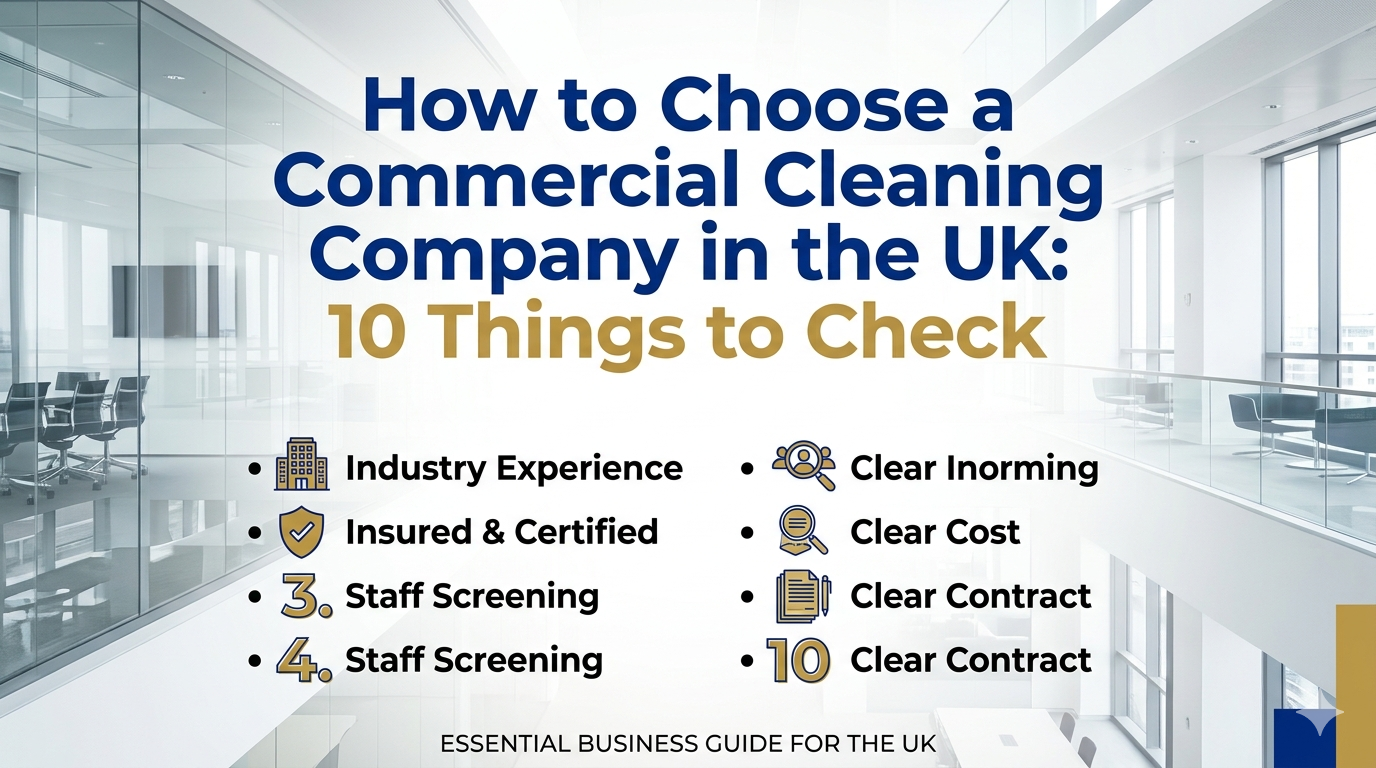
So before you sign anything, read this. These are the ten things that actually matter when you are choosing a commercial cleaning company in the UK.
1. How Long Have They Been Working in Your Type of Business
There is a big difference between a company that has cleaned offices for ten years and one that mostly does domestic houses but also takes on commercial work when they can get it. Ask them directly what kind of businesses they look after and how long they have been doing it.
A cleaning company that already works with businesses like yours will know exactly what needs doing without you having to spell it out. They will understand your compliance requirements, your busy periods, and the areas that need the most attention. That kind of knowledge saves you time from day one.
2. Are They Properly Insured and Do They Hold Industry Certifications
This one matters more than people think and it is one of the first things to ask about. A legitimate commercial cleaning company in the UK should carry public liability insurance, at minimum five million pounds worth. That protects you if something gets damaged or someone gets hurt while they are on your site.
On top of insurance, look for professional memberships and training credentials. The British Institute of Cleaning Science is one of the most recognised bodies in this industry. Companies that invest in BICSc training for their staff are showing you they take the work seriously. It is not just a badge. It is evidence of a certain standard.
3. Who Are the People Actually Walking Into Your Building
Here is something a lot of business owners overlook. You are not just hiring a company. You are letting individual people into your workplace, often when your own team is not around. That matters enormously.
Ask the company how they screen their staff. Do they run DBS checks through the Disclosure and Barring Service? Do they confirm the legal right to work in the UK before hiring anyone? Do they take references from previous employers? A company that takes its recruitment seriously will have solid answers to all of these questions and will not hesitate to share the process with you.
4. What Products Are They Using and How Are They Actually Cleaning
Walk into any professional cleaning supplier and you will find products at every price point. Not all of them work as well as the label suggests, and some of them are genuinely too harsh for everyday use around people.
Ask what products they use and why. Do they use colour-coded cloths to prevent cross-contamination between areas like toilets and kitchens? Are their chemicals safe for use around food preparation surfaces, or around people who might have allergies or sensitivities? Companies that cannot answer these questions confidently have probably not thought about them very hard.
5. Do They Have a Real Local Presence
Working with a company that is based near you makes a noticeable difference in practice. If something goes wrong, they can send someone quickly. If you need to adjust your schedule, you are not dealing with a call centre that has to relay messages to a regional manager three counties away.
For businesses across the North West, finding a proven provider of commercial cleaning Blackburn services means you get that combination of local accountability and professional standards. Local companies tend to care more about their reputation within the community because they live and work there too. That matters when you want reliable, consistent service rather than just someone filling in a rota.
6. Can They Give You Real References from Real Clients
Any company can write glowing things about itself on its own website. What you need is honest feedback from people who have actually used the service. Ask for two or three client references, ideally from businesses that are a similar size and type to yours, and actually call them.
When you do, ask specific questions. Has the team always shown up on time? Have there been any issues and how were they handled? Would they renew the contract? Those conversations will tell you far more than any brochure. Online reviews are worth checking too, but go beyond the star rating and read what people are actually describing.
7. How Do They Keep Standards Up After the First Month
This is the question that separates good companies from great ones. Almost every cleaning company puts their best foot forward when they are trying to win your business. The real question is what happens three months in, when the novelty has worn off and your site is just another stop on the weekly route.
Ask them what their quality control process looks like. Do supervisors carry out spot checks? Is there a system for clients to flag issues? Do they have regular reviews built into the contract? If the answer to all of these is vague, that is worth noting. A company that has a clear, documented process for maintaining standards is one that takes consistency seriously rather than just hoping for the best.
8. Read the Contract Carefully Before You Sign Anything
This sounds obvious but a lot of businesses skip it. Cleaning contracts can be quite detailed, and the difference between a good one and a bad one is often buried in the small print.
Before you sign, make sure you understand exactly what is included. Does the quote cover consumables like hand soap, bin bags, and paper towels? Who provides specialist equipment if it is needed? What is the notice period if you want to end the contract? What are the conditions around price increases? Go through it line by line and ask for clarification on anything that is not completely clear. A professional company will be happy to explain. One that gets cagey about the details is telling you something important.
9. How Easy Are They to Get Hold of When You Need Them
Communication is one of the most underrated factors in a cleaning contract and one of the most common reasons businesses switch providers. The service might be fine most of the time, but when something goes wrong, you need to be able to reach someone who can actually fix it.
During your initial conversations, pay attention to how quickly they get back to you and how clearly they explain things. Ask whether you will have a dedicated point of contact or whether every call goes into a general queue. Ask if there is someone you can reach outside of standard office hours if an issue comes up before an important client visit. These might seem like small things now, but they become very important at seven in the morning when your office looks like it was not touched the night before.
10. Focus on Value, Not Just the Monthly Price
Getting three quotes and choosing the lowest one is a completely natural thing to do. But with commercial cleaning, the cheapest option almost always comes with hidden costs, whether that is poor supervision, high staff turnover, or products that are not up to the job.
Think about what you actually need from a cleaning company and what it would cost you if those standards were not met. A client who walks into a poorly kept office. A staff member who raises a hygiene concern. The time you spend chasing up missed tasks and making complaints. A slightly higher monthly fee from a company that delivers consistently is worth far more than a low quote that creates problems you then have to manage.
Look at the full picture. Is the pricing transparent? Can they scale up if your business grows? Do they offer flexibility if your needs change? Those are the questions that matter when you are thinking about value rather than just cost.
A Quick Word Before You Make Your Decision
Take your time with this. A cleaning contract is not something you want to revisit every few months. When you find a company that ticks these boxes, that communicates well, turns up reliably, and genuinely cares about the standard of their work, hold onto them. They are worth more than people realise.
The right commercial cleaning company becomes almost invisible in the best possible way. Your premises are always clean, your team never has to think about it, and you are free to focus on running your business. That is what you are actually paying for.
Frequently Asked Questions
How much should I expect to pay for commercial cleaning in the UK?
Pricing depends on the size of your premises, how often you need it cleaned, and what the job involves. Most businesses pay somewhere between £15 and £30 per hour, though larger sites or specialist environments are usually quoted on a bespoke basis after a survey.
How often does a commercial space actually need to be cleaned?
For most offices and retail environments, a daily or twice weekly clean works well depending on how busy the space gets. Kitchens, bathrooms, and high-footfall areas generally need more frequent attention, and some regulated industries have minimum standards you will need to meet.
What do I do if the standard of cleaning starts to slip?
Get in touch with your account manager straight away rather than letting it build up. A good company will take the feedback seriously, find out what happened, and put things right quickly. If the same issues keep coming back despite your feedback, that tells you something important about whether this is the right provider for you.
Is it actually worth outsourcing cleaning rather than employing someone directly?
For most businesses, yes. Outsourcing removes the costs and responsibilities that come with direct employment, including sick cover, training, equipment, and management time. You also get the benefit of a whole team behind the service rather than relying on a single person.
What are the most important things to ask when getting a cleaning quote?
Ask about their insurance, how they vet their staff, what their quality control process looks like, exactly what is included in the price, and whether they have experience with businesses like yours. The answers will quickly show you which companies are serious and which ones are just trying to win the contract.