I used to think deep cleaning was just cleaning but for longer. Turns out that’s not really it. A deep clean is about the stuff you walk past every single day without noticing, the grease film on top of your kitchen cabinets, the dust bunnies hiding under the couch, the grout that used to be white. Regular cleaning keeps a space looking okay. A deep clean actually fixes it.
Most cleaning companies will tell you the same thing when you ask what separates a deep clean from a standard visit. It’s not really about doing more of the same tasks. It’s about reaching the spots that get skipped week after week until they turn into a real problem.
So let’s get into what it actually covers, how often you need one, and why so many people just end up hiring someone for it instead of white knuckling their way through a Saturday.
QUICK ANSWERS BEFORE WE GET INTO IT
A deep clean handles the hidden grime that regular cleaning misses.
Homes usually need one every three to six months, give or take.
Offices should aim for quarterly, maybe more if the place gets a lot of foot traffic.
DIY works, but a cleaning company gets it done faster and usually catches more.
It’s not just cosmetic. It genuinely affects air quality and how healthy a space feels to be in.
OKAY BUT WHAT COUNTS AS A DEEP CLEAN
Here’s a way to picture it. If regular cleaning is brushing your teeth, deep cleaning is the dentist visit. You still need both. One just goes way deeper than the other.
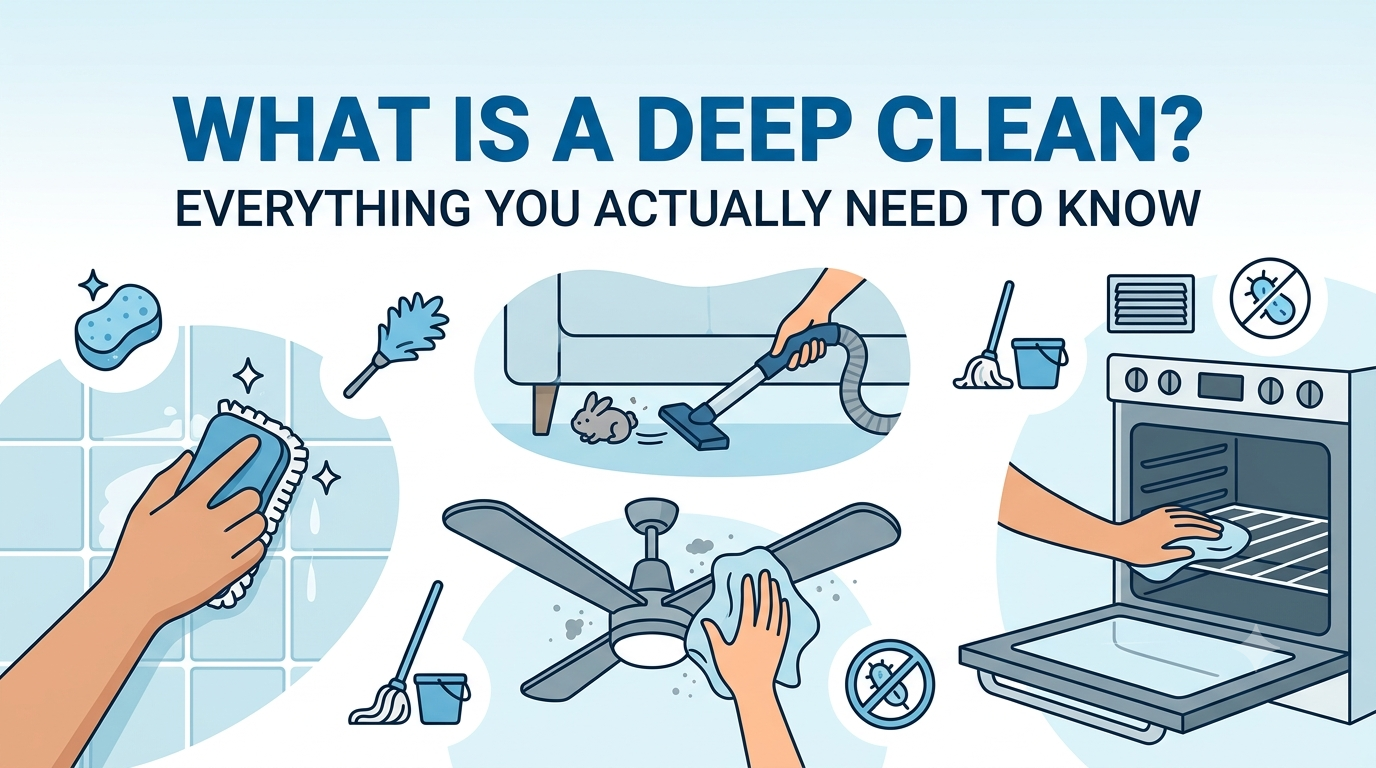
A normal cleaning session hits countertops, floors, maybe the bathroom sink. A deep clean goes into the oven, behind appliances, inside vents, along baseboards, under furniture nobody’s moved in months. It’s slower work. It’s also the reason your place can feel completely different afterward, not just tidier but actually clean.
WHAT’S ON THE LIST FOR EACH ROOM
Kitchens first, because honestly they need it the most. Grease sneaks onto surfaces even when you think you’re keeping up with cleaning. A proper deep clean means degreasing the stove and range hood, scrubbing the inside of the oven and fridge, hitting the grout lines, and actually opening cabinets to clean inside them, not just wiping the front.
Bathrooms are next on the list. Soap scum and mineral deposits build up quietly. Deep cleaning here means descaling the showerhead and faucets, scrubbing tile properly instead of a quick swipe, disinfecting the toilet the whole way through, and pulling apart the exhaust fan because those things collect way more dust than you’d expect.
Bedrooms and living rooms get skipped a lot in daily cleaning, mostly because the mess isn’t obvious. But ceiling fans, light fixtures, the space under and behind furniture, window tracks, all of that piles up dust for months at a time. A deep clean catches it.
And then floors. Carpets especially hold onto dust and allergens no matter how often you vacuum. Steam cleaning helps a lot here, along with properly scrubbing hard floors rather than just running a mop over them and calling it done.
WHY BOTHER, HONESTLY
I’ll be straight with you, it’s not just about things looking nicer. The EPA has pointed out that indoor air can be two to five times dirtier than outdoor air in a lot of homes, mostly because dust, pet dander, and mold spores get trapped and just sit there.
That part surprises people. You can vacuum religiously every week and still have allergens sitting in your carpet or hiding in your vents, quietly making the air worse without you realizing it.
There’s a money side to this too. Leave grease sitting on kitchen surfaces long enough and it can actually damage them permanently. Bathroom mold spreads fast once it gets going. A deep clean on a regular schedule tends to catch these things while they’re still small.
SO HOW OFTEN SHOULD YOU ACTUALLY BE DOING THIS
For most homes, every three to six months is a decent rule of thumb. If you’ve got pets running around or someone in the house with allergies, lean toward the shorter end of that.
Offices are a bit different. Quarterly works as a baseline, but busier places with a lot of people coming through the door probably need it more often. More people just means more mess, more germs, more everything.
OFFICE CLEANING VS OFFICE DEEP CLEANING, THESE AREN’T THE SAME
This trips people up a lot. Regular office cleaning covers the basics, emptying trash, wiping desks down, vacuuming. It keeps things functional day to day. What it doesn’t cover is the buildup on shared keyboards, the break room microwave nobody’s properly cleaned in ages, or meeting room carpet that’s absorbed years of foot traffic.
That’s where a scheduled deep clean comes in. It handles disinfecting shared surfaces properly, deep cleaning carpet and upholstery, cleaning appliances inside and out, and giving restrooms an actual scrub instead of a five minute pass.
There’s actual research behind why this matters too. The International Facility Management Association has found that workplace cleanliness is one of the bigger factors in how satisfied people feel at their jobs. It sounds like a small thing until you’re the one sitting at a dusty desk all day.
If your regular office cleaning routine is solid but nobody’s scheduled a proper deep clean in a while, that’s usually the gap.
WHAT’S REALLY THE DIFFERENCE BETWEEN THE TWO
Regular cleaning happens often and deals with what’s visible. Deep cleaning happens less often and deals with everything that isn’t.
Neither one really replaces the other. Regular cleaning keeps things from sliding backward between deep cleans. The deep clean is what gives regular cleaning an actual clean baseline to work from in the first place.
SHOULD YOU JUST HIRE SOMEONE FOR THIS
You can absolutely do a deep clean yourself. Plenty of people do. But there’s a reason cleaning companies stay in business beyond just saving you time.
Trained cleaners already know what to check without being told twice. They’ve got equipment that handles carpets and upholstery way better than whatever’s sitting in your closet. And they know which products work on which surfaces, which matters more than people realize when it comes to not accidentally damaging something.
Time is the other big factor. What eats up your whole weekend might take a trained team a few hours, start to finish.
For businesses this matters even more. A consistently clean office says something to clients and employees, even if nobody ever brings it up directly. Working with a dependable cleaning company keeps that consistency going without anyone having to think about it.
A FEW SIGNS YOU’RE PROBABLY OVERDUE
Dust that comes right back a day or two after cleaning. Grime in kitchen or bathroom corners that just won’t move no matter how hard you scrub. A musty smell that sticks around even after opening every window. Allergies that flare up worse indoors than out.
If a couple of these sound familiar, it’s probably time.
A FEW THINGS TO DO BEFORE THE CLEANING STARTS
Clear surfaces off first so whoever’s cleaning, you included, can actually get to everything. Move smaller furniture pieces if you’re able to. If you’re bringing in a cleaning company, mention any specific problem spots ahead of time instead of hoping they notice on their own. And keep the place ventilated during and after, especially if stronger cleaning products are involved.
WRAPPING THIS UP
A deep clean really isn’t just a longer version of your normal routine. It’s a different kind of job altogether, one that goes after everything hiding behind, under, and inside the stuff you use every day. Doesn’t matter if it’s a kitchen, a bathroom, or an entire office, buildup happens regardless of how often you tidy up.
If you’re running a household or handling office cleaning for a growing team, pairing your regular routine with scheduled deep cleans keeps things genuinely hygienic instead of just looking fine on the surface. And if doing it yourself sounds like more trouble than it’s worth, that’s exactly the gap a solid cleaning company fills.
At the end of the day, a clean space isn’t just about appearances. It’s about the air you’re breathing and the surfaces you’re actually touching. That’s what a real deep clean gets you.
A FEW QUESTIONS PEOPLE OFTEN ASK
What’s the actual difference between a deep clean and a regular clean?
Regular cleaning handles daily stuff like dusting and vacuuming. Deep cleaning goes after buildup in vents, grout, and appliances, and happens far less often but goes way deeper.
How long does a deep clean usually take?
Most homes take somewhere between three and six hours depending on size. Bigger homes or office spaces might need a full day or a small crew.
How often should an office get a proper deep clean?
Every three months is a reasonable starting point. Places with heavier foot traffic might need it more often just to stay on top of things.
Is paying for a cleaning company actually worth it?
For most people, yes. They bring the right equipment, know what they’re doing, and usually finish the job faster and more thoroughly than a DIY attempt.
What spots do people forget about the most?
Behind appliances, inside vents, under furniture, grout lines, and window tracks. Basically anywhere you can’t see without really looking.